Facebook

Twitter

Subcribe to RSS Feed

Subscribe to Jaya Kula's Newsletter!


Mantra Practice

Many people want to do mantra practice (japa), but do not have mantra initiation. I have written about this before on Jaya Kula, but I’m going to say a bit more now about how to practice mantra correctly if you do not have initiation. I am including a few MP3 recordings of mantras that you can practice safely and benefit from even if you do not haveĀ  formal initiation. There is also a video demonstration of how to count mantras on a mala.

Any of the mantras below may be practiced at any time. However, if you want to receive maximum benefit, you should do mantra japa as a seated practice in the early morning and before you go to sleep also.

Basic instructions

1. Pick ONE mantra and stick to that.
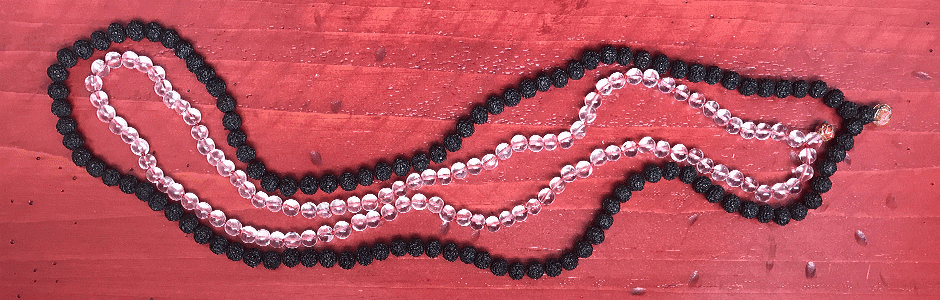
2. Use a crystal, 108 bead mala. Do not wear the mala as jewelry. Japa malas should be used only for japa.
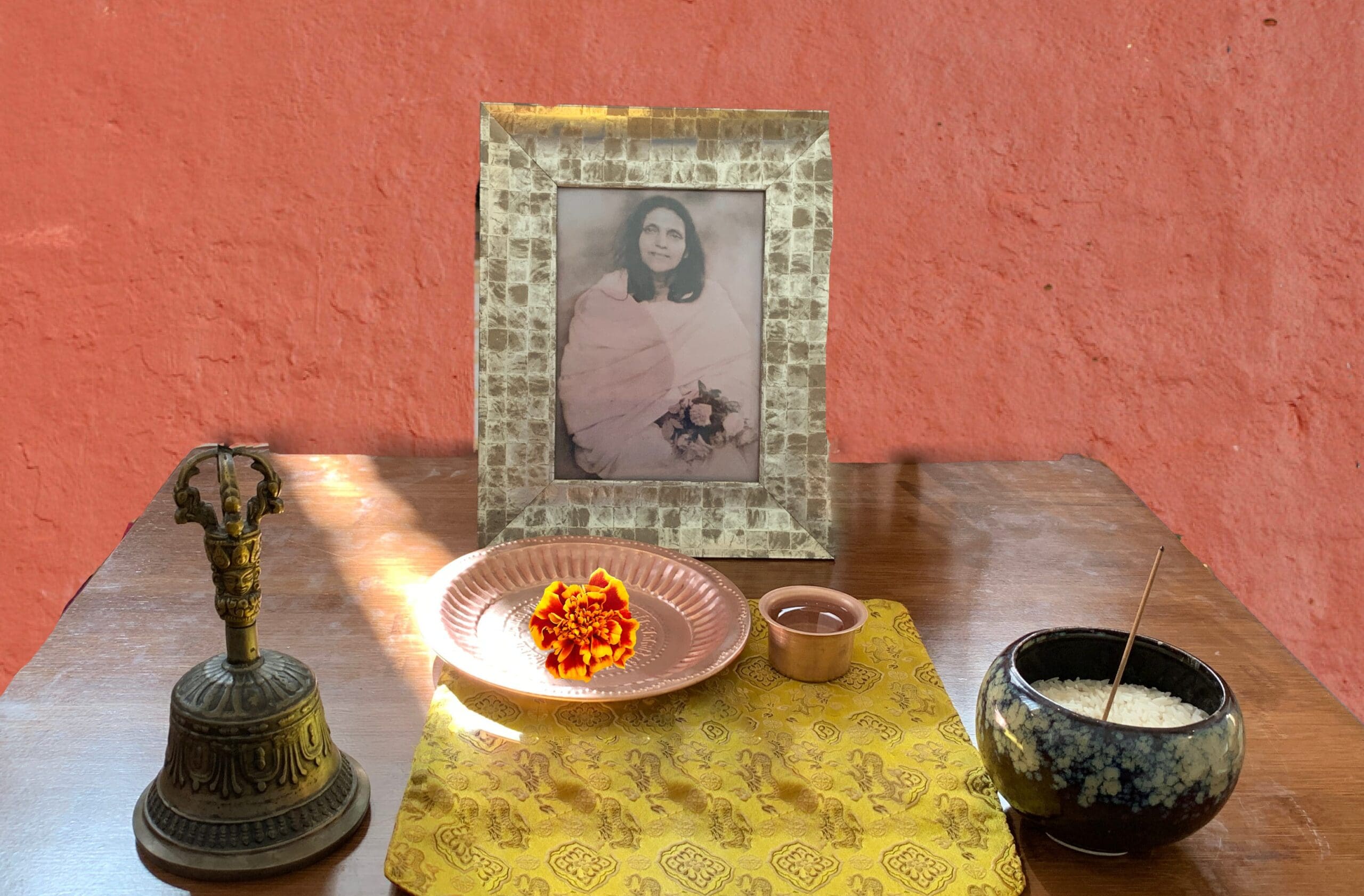
3. Sit facing East, Northeast or North. You may create an altar. All pictures or murtis (statues) of Gurus and Deities should be placed somewhat higher than eye level.
4. Each session should begin with chanting OM once with awareness at the heart center.
5. Do a minimum of 108 repetitions of the chosen mantra, using the beads to count. The mantras I have recorded here are very short, so doing more than one round should not be hard. In the video below, I give instructions for counting beads the Hindu way.
6. Chant out loud until you feel really in tune with the mantra. This could take a few weeks or months. Then begin chanting more quietly, then in a whisper for some time. Then just mouth the words. Finally, when the mantra is firmly installed in your body and mind, begin chanting mentally only. Now chant one mantra on the in breath and one on the out breath.
7. Finish with abiding in the fruit of your practice. This means sitting quietly after you are done and noticing and enjoying your condition. Abiding is very important. Try to recall and invoke this abiding state during the day when you are not sitting, especially when you are in stressful situations.
8. Finally, chant OM and send out a prayer for the welfare of all teachers, past, present and future, and all beings.

If you do japa practice every day, you will encounter every kind of condition in yourself. Some days you will feel peaceful and expansive. On other days you will feel distracted, anxious, aggravated, scared, sick and so on. This is normal. Just keep doing the practice. Slowly over time, these tensions will unwind.

It is a mistake to search for peace or bliss, or to berate yourself or feel you are failing if these do not arise. These attitudes will lead you into fantasy, and/or to stopping the practice. Just keep on no matter what happens and try to relax any judgment about your condition.

The Mantras

Please pay attention to the exact pronunciation in the recordings. You can vary the speed of your chanting. If you have a question about doing mantra practice, please leave it in a comment.

OM -- the original or first mantra.
OM

Audio clip: Adobe Flash Player (version 9 or above) is required to play this audio clip. Download the latest version here. You also need to have JavaScript enabled in your browser.

OM MA -- the primordial Ma mantra.
OM MA

Audio clip: Adobe Flash Player (version 9 or above) is required to play this audio clip. Download the latest version here. You also need to have JavaScript enabled in your browser.

OM NAMO NARAYANI -- Divine Mother or Anandamayi Ma as Narayani -- the sustainer of life.
OM Namo Narayani

Audio clip: Adobe Flash Player (version 9 or above) is required to play this audio clip. Download the latest version here. You also need to have JavaScript enabled in your browser.

OM NAMAH SIVAYA -- the Shiva mantra.
OM NAMA SIVAYA

Audio clip: Adobe Flash Player (version 9 or above) is required to play this audio clip. Download the latest version here. You also need to have JavaScript enabled in your browser.

Watch the video to learn how to use a mala.

In Ma’s love,
Shambhavi

What is Your Sankalpa?

Paramahamsa Satyananda Saraswati, December 2009. Photo by Swami Karma Karuna

Paramahamsa Satyananda Saraswati, 12/09. Photo by Swami Karma Karuna

Paramahamsa Satyananda Saraswati, the great Guru, Bhakta, Disciple and humanitarian took Mahasamadhi on Dec. 5th. He left many treasures for our benefit. One of these treasures is his beautiful, poetic sankalpa.

A sankalpa is a statement of resolve and desire. You resolve to attempt and accomplish what your true heart – the heart of nondual wisdom – urges.

A sankalpa can be a small resolve to be realized in a short amount of time. One can also set a sankalpa for one’s entire life. It is this type of sankalpa that Paramahamsaji wrote. (more…)

Is Non-attachment Boring?

A student from Oregon asks:

I have been feeling very neutral about everything (people, work, general things) as if I am just existing and these things (people, work, things) just happen around me. Is this normal? I first thought that I was falling sick and this was a reaction to that but so far I have not fallen sick and the neutral feeling has not gone away. Do you have any thoughts about this? (more…)

How to Stop Thoughts

A reader from Massachusetts asks:

I cannot stop thinking. I tried meditation, but it was so unpleasant with all these thoughts in my mind. How can I stop this and experience an empty mind?

Many people assume that spiritual practice = meditation. But meditation is really quite an advanced practice. It is normal not to be able to sit quietly and enjoy that when your mind is racing. (more…)